
Undergraduate
Criminal Justice
Examining Ethics and Responsibility in Law Enforcement

Criminal Justice (On Campus Program)
Interested in a career in criminal justice or a related field? At Simpson, our Criminal Justice program prepares you with the knowledge, real-world experience, and personalized support to help you achieve your goals. With one-on-one attention from professors and interactive classes, you’ll build a strong foundation while exploring careers in policing, courts, corrections, and human services.
Learning goes beyond the classroom. You’ll gain hands-on experience through field experiences, service-learning opportunities, guest speakers, and visits to local agencies. These experiences connect classroom learning to real-world situations while helping you build professional skills and understand the many career paths available in the field.
Whether you plan to enter the workforce or pursue graduate school, the Criminal Justice program will prepare you for what’s next. Graduates can pursue careers in policing, courts, corrections, human services, and other fields, including professions that work with trauma, such as first response, health care, insurance, and education.
Why Simpson College for Criminal Justice?

From Law Enforcement to Global Security
Studying Criminal Justice at Simpson prepares you for a broad range of careers focused on protecting the safety and rights of others. Whether you’re drawn to traditional law enforcement or emerging roles in global security, you’ll gain a deep understanding of how the U.S. criminal justice system works — and how its many parts interact.
You’ll learn to interpret best practices in the field, navigate complex ethical issues, and approach criminal justice with both abstract thinking and real-world problem-solving skills. This program equips you with the knowledge and mindset to lead in a field that is constantly evolving.

Career Ready
Our graduates are prepared to launch successful careers and make an immediate impact in the workforce. Here are a few examples of where Simpson alumni are building their careers:
- Ames Police Department
- American Federation for Children
- Children and Families of Iowa
- City of Atlantic Police Department
- Indianola Police Department
- Iowa Department of Corrections
- Iowa Department of Health and Human Services
- Story County Police Department

Get a Jump Start On A Master's Degree
When you are a junior in the criminal justice program and have a 3.5 GPA or better, you may begin taking courses (up to three) that will give you dual credit in the undergraduate and the Master of Arts in Criminal Justice programs.
If accepted, this advanced standing program is a great option for students who are seriously considering earning a Master’s degree after completing their Bachelor’s degree. You can save tuition costs for one or two semesters and decrease the time required to complete your MACJ.
Why Simpson College for Criminal Justice?

Median annual national pay
- U.S. Bureau of Labor and Statistics 2025
Anticipated job growth between 2025-2035
- Bureau of Labor and Statistics 2025
Bachelor's Criminal Justice salary in Iowa
- Zip Recruiter 2026
Meet Our Faculty

Denise Leifker
- Associate Professor
- Department Chair Sociology, Criminal Justice, Human Services, and Political Science
- Director Master's in Criminal Justice

Craig Peck '89
- Instructor of Sociology and Criminal Justice

Mark Ruelas
- Instructor of Criminal Justice
Need assistance? Contact us!
- denise.leifker@simpson.edu
- 515-961-1273
- Wallace Hall
- Monday - Friday, 8 a.m. - 4:30 p.m.
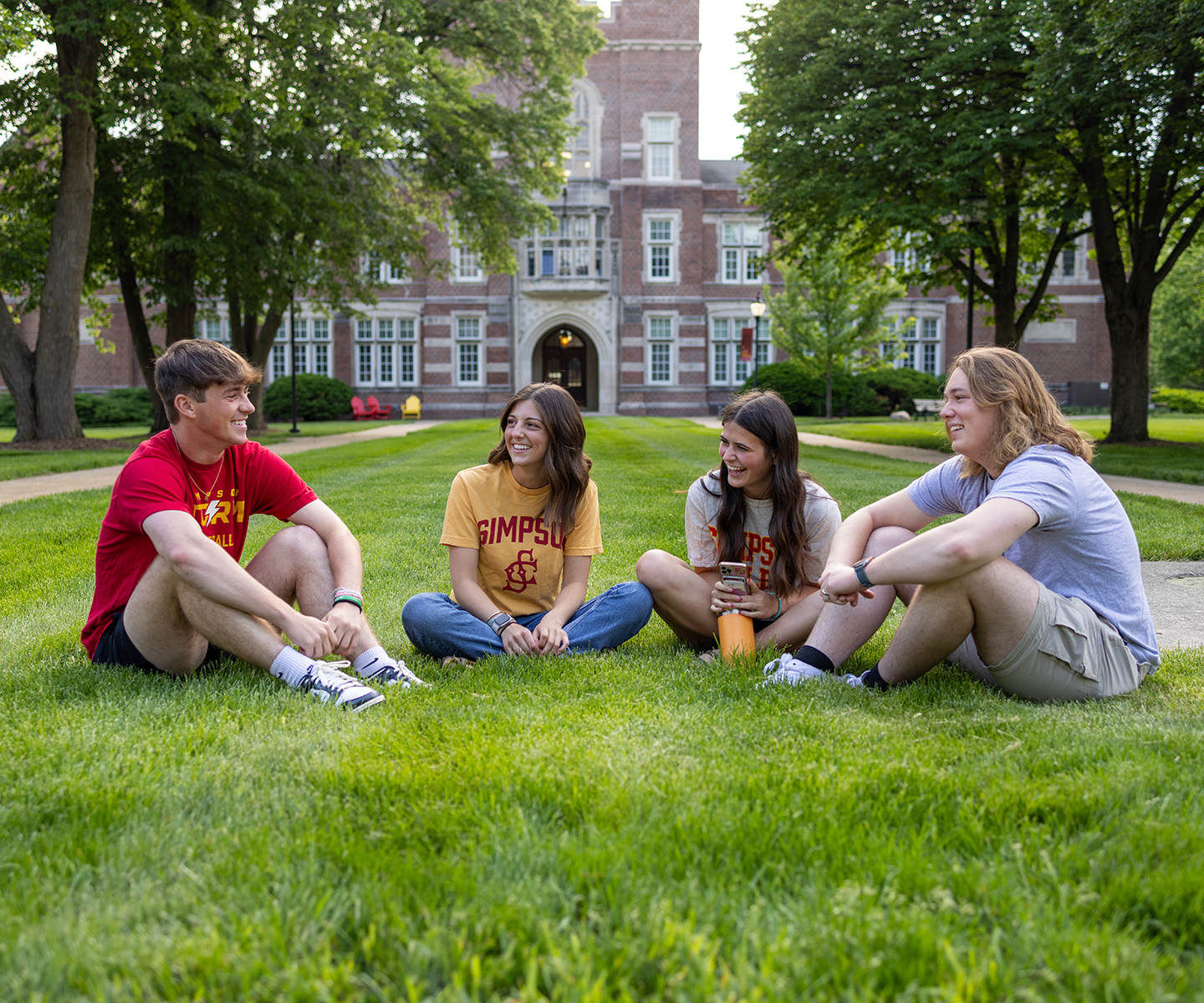
The Social Justice Alliance (SJA) is a Simpson College organization whose mission is to help individuals understand the criminal justice field while promoting social equity, critical thinking, reform, and collaboration. Through education, involvement, and themed activities, we hope to guide individuals into careers and lives that involve the criminal justice field and social justice advocacy.